
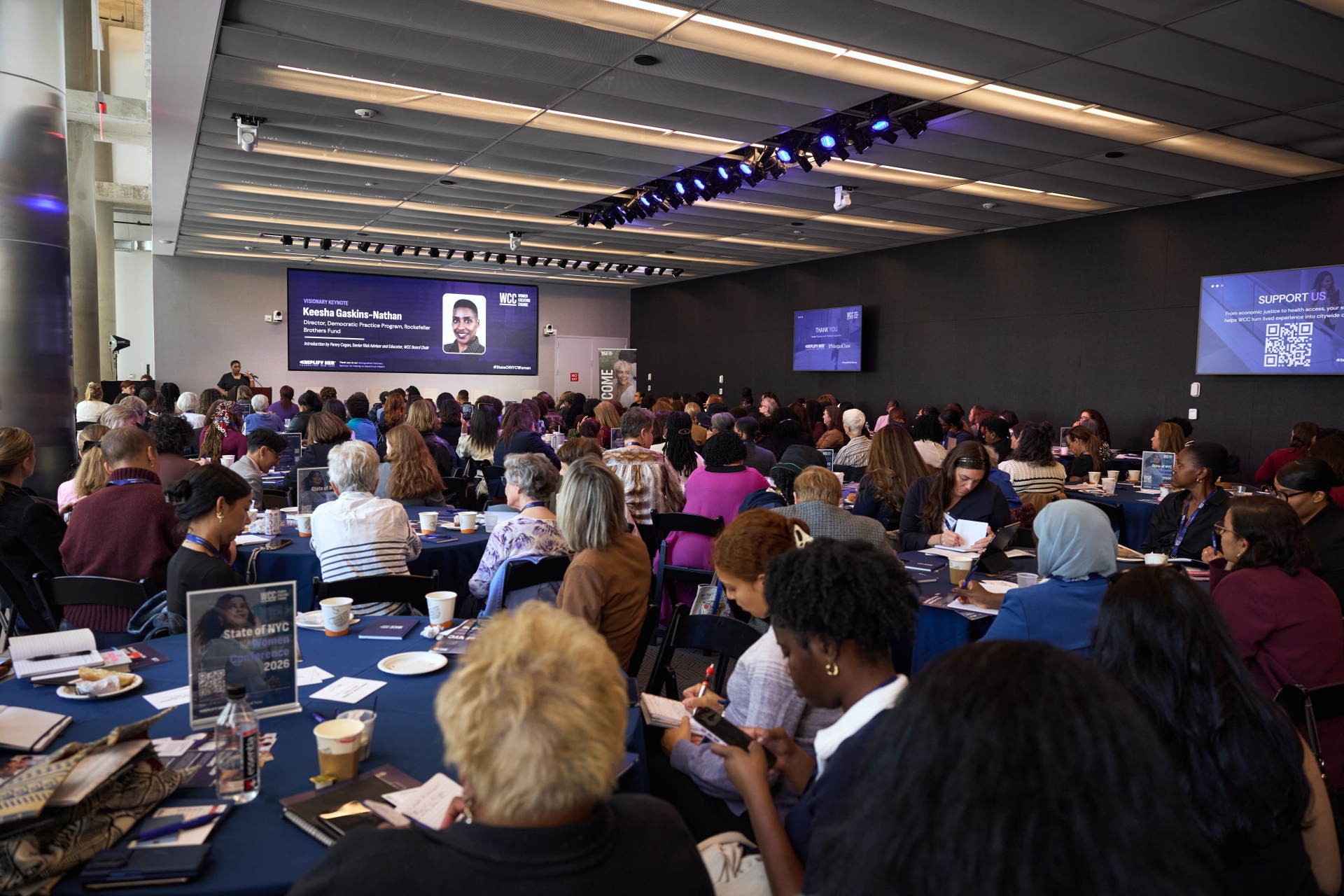
Women Leading NYC Forward at the State of NYC Women Conference
Women Creating Change’s second annual conference brought leaders from government, philanthropy, business, and community organizations to Civic Hall. Over the day, we examined issues shaping women’s lives in New York City and found 7 key topics that had leaders discussing what it would take to turn lived experience into citywide change.
NEW YORK, N.Y.—October 19, 2026— On October 8, Women Creating Change (WCC) welcomed over 370 leaders, advocates, policymakers, funders, students, and community members to Civic Hall and online for the second annual State of NYC Women Conference.
The desire for conversation was matched by the demand in the room. Welcoming 100 more participants than our inaugural conference in 2025, we knew this was the time. Just weeks before the November elections, not to mention being held on Latina Equal Pay Day, we found the room asking, “What will it take?” What will it take for women in New York City to move from surviving to thriving? For those who could not be in the room, here is what we heard.
WCC President and CEO Sharon Sewell-Fairman opened with the fact that we need to think about actionable next steps, not just discussions. She noted, “We’ll focus on what it takes to move from conversation to action.” She kicked off the day alongside ShehilaRae Stephens of NYCEDC, Council Member Gale A. Brewer, and WCC Board Chair Penny Cagan.
Centering the Day
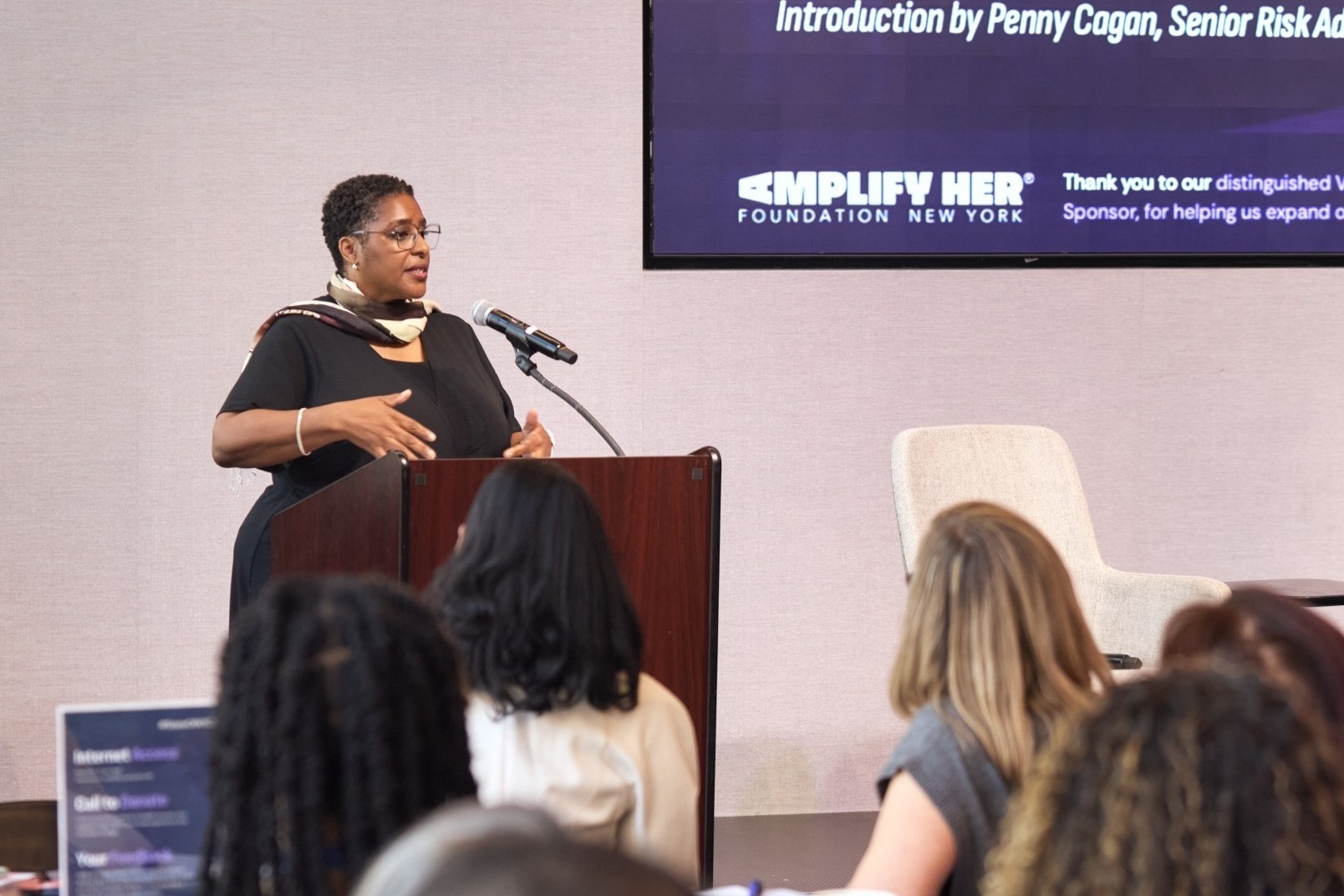
Getting us started, Keesha Gaskins-Nathan of the Rockefeller Brothers Fund highlighted forces that are shaping our city: climate impacts, late-stage capitalism, evolving technology, and public demand for new governance. In her visionary keynote, she noted that the change we are able to make across New York City will likely act as a framework for what happens elsewhere. “What we learn in one space transfers to another. So, all the work done in New York City is actually seeding work done elsewhere.”
Seven Issues Shaping Women's Lives in New York City
1. Economic Security: Policy wins fail to translate into everyday security
New York has invested in childcare, guaranteed income, and economic supports, yet many women still struggle to get by. The impact of this was felt in the room after testimony from Stephanie Unuero on what low wages cost a family, a story that brought forward the real-world outcome of these failed systems. As the discussion grew, Grace C. Bonilla of United Way of New York City reported that about 59% of New Yorkers cannot make ends meet, while the federal poverty measure counts only 18%. Gregory J. Morris of the NYC Employment and Training Coalition highlighted that the city’s post-pandemic jobs comeback came without a wage comeback. Senator Liz Krueger worded it clearly, “Capitalism is monetizing everything in our lives, and women face more exploitation than ever before. If you work in policy, you need to know the facts and understand what’s going on. It’s all connected,” in the conversation moderated by Seher Khawaja of Equal Rights Advocates.
2. Climate Justice: Solutions that expand opportunities and reduce burden
Climate decisions are kitchen-table issues, and the conversation centered on what can be done under these constraints. Priya Mulgaonkar of the Green Co-op Council pointed out that buildings produce about 70% of the city’s climate pollution, and that 700,000 New York families live in co-ops and condos, making affordable upgrades a question of household stability. But where is stability when millions and millions of dollars have been kept from environmental justice communities? “We had just received $3 million from the EPA to develop charrettes, and then it was cut,” noted Peggy Shepard, Co-Founder and Executive Director of WE ACT for Environmental Justice.
Barbara E. Brown of Eastern Queens Alliance brought up seemingly obvious solutions that are yet to be enacted, such as sound insulation for neighborhoods under JFK flight paths. From big to small, changes are not being made. The conversation was moderated by WCC’s Laura Edidin.
3. Health Justice: From Access to Choice
New York has positioned itself as a national leader on reproductive rights and gender-affirming care. So why are so many New Yorkers still being left behind? Federal policy shifts, provider shortages, and misinformation are hitting immigrant women, incarcerated mothers, and LGBTQ+ youth and families hardest.
“It’s not just, ‘Does she have access?’ It’s, ‘Does she have a choice in what happens?’” said Dr. Alethea Taylor of Hour Children. The barriers are real. Lourdes A. Rivera of Pregnancy Justice noted that a woman recently gave birth shackled in a Brooklyn courtroom, even though New York outlawed shackling pregnant people in 2009. Dr. Taylor continued, “Still, the most arduous issues are the abysmal eligibility rules, the restrictions on health and support for mothers in prison and mothers of children on the outside, and visitation.”
Rivera also brought up a policy that works: since NYC’s public hospital system began requiring written consent before drug testing pregnant patients, reports to ACS have dropped by 80%, and by 90% for Black women. In practice, this means fewer pregnant patients and new parents being reported to child protective services simply for being drug tested without their knowledge, and fewer families facing investigation or separation as a result. The steepest drop was for Black women, who have been reported at disproportionate rates. Dr. Ann-Gel Palermo of Icahn School of Medicine at Mount Sinai urged investment in public health infrastructure that addresses problems upstream. Rosemonde Pierre-Louis of NYU’s McSilver Institute moderated.
4. Digital Safety: Online Abuse Is Offline Harm
Online and offline harm are intertwined; they are not separate from each other, and online abuse results in offline harm. This discussion could have covered the full day. It was moderated by WCC’s Ane Mathieson, who cited a 2025 UN Women survey finding that 70% of women activists, journalists, and human rights defenders had faced online violence in their work, and 41% of those surveyed linked offline assault, stalking, or harassment to the online violence they faced.
Dr. Taveeshi Gupta of Equimundo reported that the share of young men who believe a man should always know where his girlfriend is has grown from 46% in 2017 to 52% today, a belief that easily travels from offline to online spaces. Yet online abuse is often not seen as harmful, even as Sherry Hakimi of Pirth.org described women hit with thousands of abusive messages an hour while reporting systems leave the burden on them. “It’s all gender-based violence,” said Dr. Gupta.
5. Youth Leadership: Emerging youth advocates
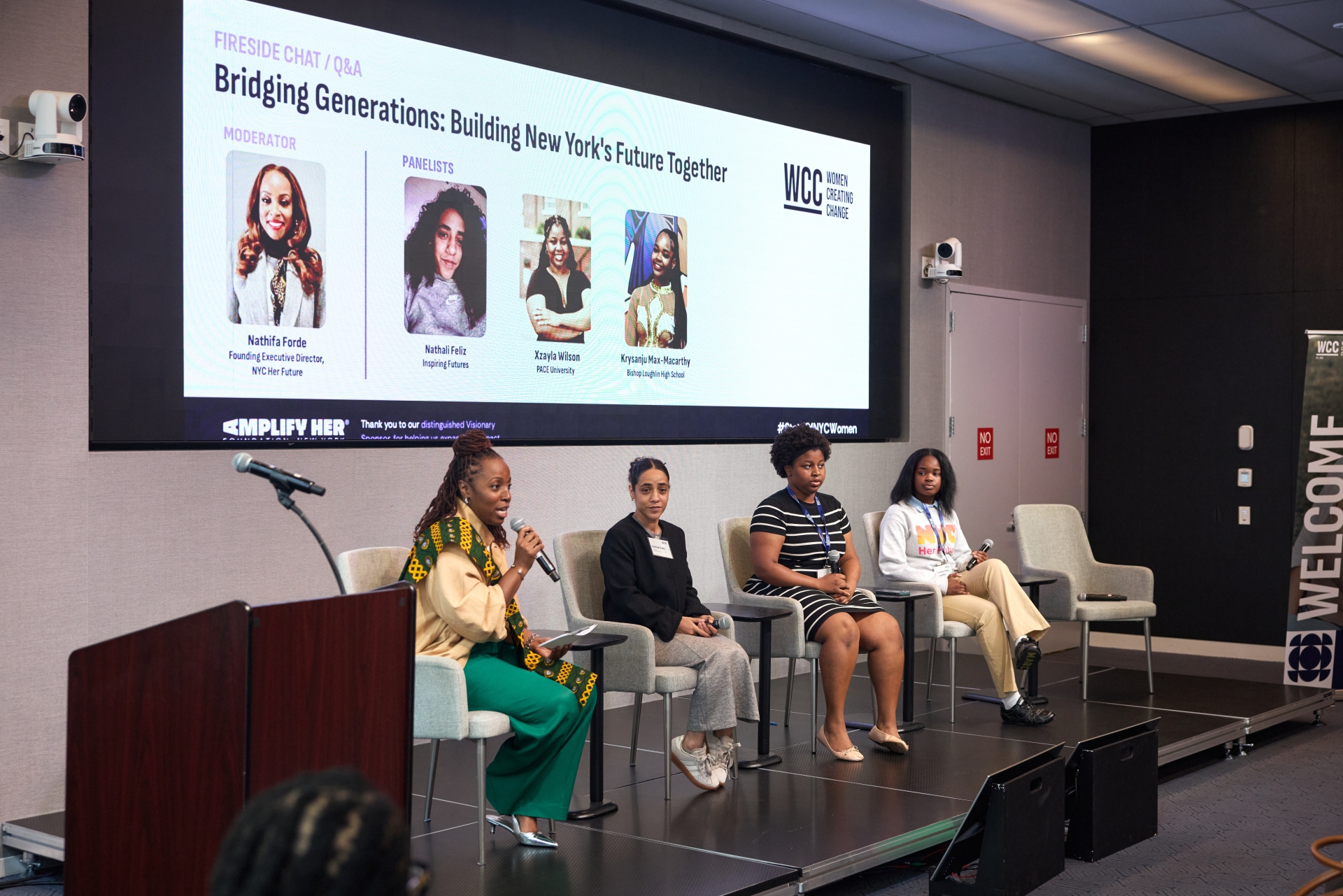
One memorable moment of this fireside chat came when the youth panelists said they want to be invited into spaces, not just to listen, but to lead. That set the tone for the discussion. It was evident that these young women, Nathali Feliz, Xzayla Wilson, and Krysanju Max-Macarthy, had a lot to say but were rarely given the chance to say it.
Moderated by Nathifa Forde of NYC Her Future, the discussion brought up three main points. “One of the barriers in working with young people is them not knowing their rights. And even if they know their rights, it’s about where to put them into practice,” said Feliz. Panelists also noted that young people don’t always know how to articulate what they are feeling and thinking, and asked politicians to meet them in ways they understand, asking how young people are feeling, not just what they want to do and see. “Just seeing the outcome, me sitting here, is the result of fighting for my rights and for my voice to be heard,” Feliz added.
6. Political Power: Women's Leadership in New York City
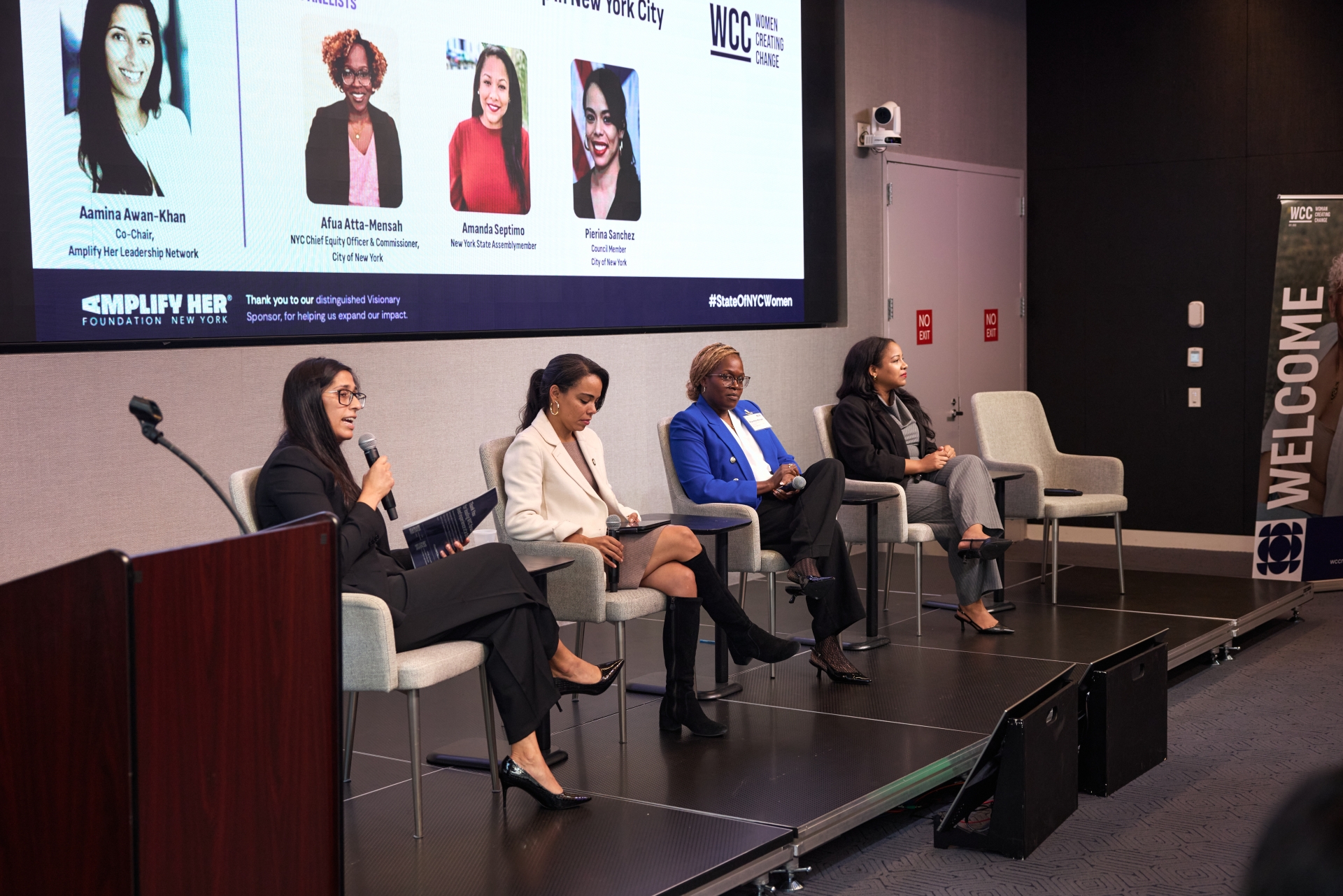
On the different paths they took to positions of political leadership, Council Member Pierina Sanchez spoke about growing up in the Bronx without a political family and learning in college that she could do something about the history she was taught. “History was always told by a white man, and that’s what did it for me.” NYC Chief Equity Officer Afua Atta-Mensah shared that hearing families choose between rent and groceries brought her into government.
“I never got the tap on the shoulder,” said Assemblymember Amanda Septimo. “I know I’m in a world where women will give you the tap on the shoulder and let you in.” Aamina Awan-Khan of the Amplify Her Leadership Network moderated.
7. Systems That Work for Women
We had spent the day on bold ideas, promising policies, and community-driven solutions, and now we had to work out how to make them last. Diana Franco of Women.NYC called for building ecosystems around women’s lives rather than isolated programs. Grace Rauh of Citizens Union pointed to the city’s new survey of more than 4,000 parents on universal childcare as an example of policy built by listening. L. Joy Williams of the NAACP New York State Conference said that systems that no longer serve us need to change, and that civic engagement has to last beyond Election Day, starting with something simple like asking the people around you whether they are registered. She noted that more than 60% of people say no one ever asked them to register to vote.
“We can’t afford to ignore the affordability agenda,” Jahmila Edwards of the NYC Office of the Mayor urged. This final panel was moderated by board member Sabrina Stratton of Amalgamated Bank, who closed with the remarks: “Building systems that work for women requires more than good policy. It requires trust. It requires partnership. It requires accountability.”
Honoring Changemakers
Two important moments were taken to recognize women who made a notable impact on this city. First, Michelle A. Henry of JPMorganChase presented the Legacy of Leadership Award to Ana L. Oliveira, President & CEO of The New York Women’s Foundation. “There isn’t anything that we’re not capable of doing. If we do it together, this is a time to act together,” said Oliveira.
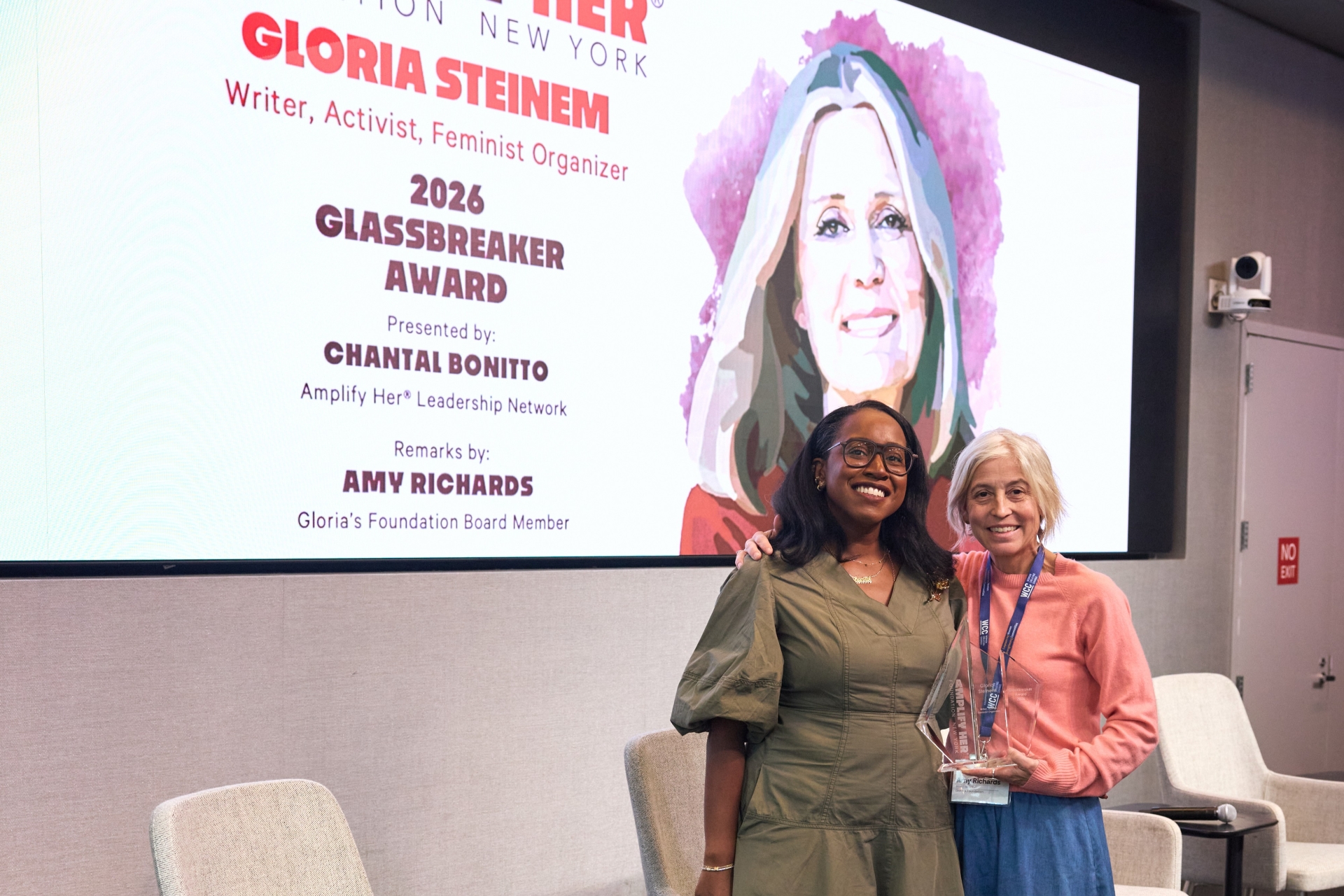
And lastly, the Amplify Her Foundation Glassbreaker Award honoring the late Gloria Steinem was presented by Chantal Bonitto and accepted in her memory by Amy Richards of Gloria’s Foundation. Every attendee left with a copy of Steinem’s memoir, An Unexpected Life, and with her words: “Revolutions that last don’t happen from the top down; they grow from the bottom up.”
Help Lead NYC Forward
- Watch the full conference on YouTube
- Take one action this week: add early voting to your calendar, and ask someone in your life whether they are registered to vote. Find other ways to get involved here.
- Nominate a woman who made a difference in your life as a Changemaker.
- Sign up for our newsletter so you never miss an event.
- Support this work: click here to donate.
Thank You
To our Visionary Sponsor Amplify Her Foundation, our Champion Sponsor JPMorganChase, and every one of our valued sponsors: your investment made this day possible and keeps women leading NYC forward.
To the speakers and moderators who brought their expertise, lived experience, and courage to the stage, to our MC Tirza Barnes, and to every attendee, partner, and volunteer who turned a conference into a community: thank you.
About
Women Creating Change (WCC), formerly known as the Women’s City Club of New York, is a nonprofit, nonpartisan organization dedicated to promoting the rights of women and gender-expansive individuals, ensuring they have the power to shape the future of New York City.
Founded in 1915 by suffragettes committed to promoting responsive government and improving conditions for the women of New York City, WCC works to advance gender equity by equipping women of color, women experiencing financial hardship, and gender-expansive individuals with the knowledge, tools, and resources to advocate for the issues that matter most to them. WCC collaborates with partners, policymakers, and advocacy groups to drive real change in economic justice, education, health care and reproductive justice, and safety. Through our research, advocacy, and leadership development programs, we empower women to shape policy, strengthen communities, and transform systems.
We're committed to building a more equitable New York City together with women and gender-expansive people from underrepresented communities. Visit wccny.org.
Media Contact
For interview requests or media inquiries, please contact Erin Clarke at [email protected] or 347-831-1096.